
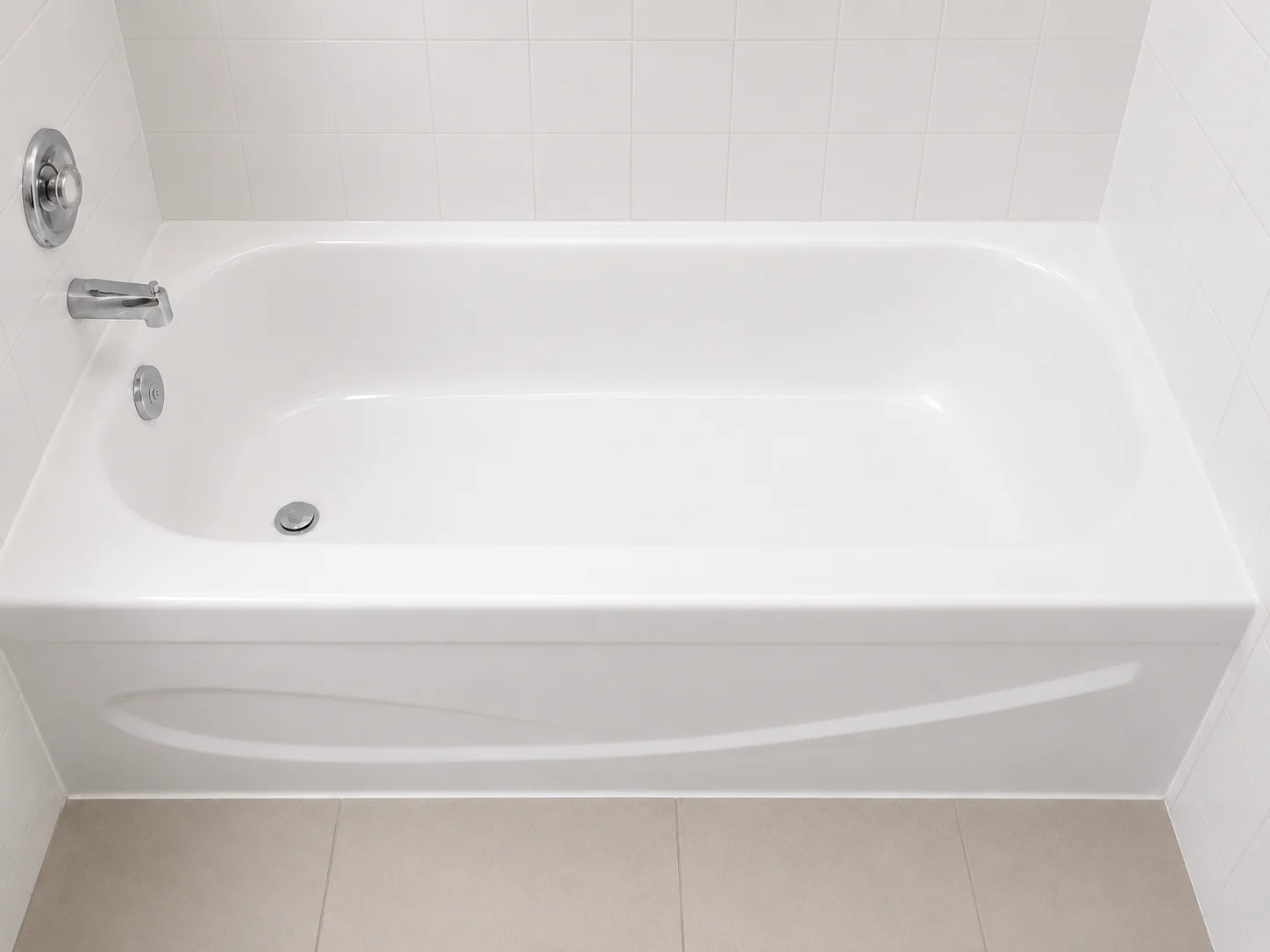
What bathtub reglazing changes
Bathtub reglazing—also called bathtub refinishing—focuses on the visible finish. Preparation and a new coating system can improve the appearance of many tubs that are dull, stained, scratched, discoloured or covered by a failing previous coating.
The process does not replace the fixture, move plumbing or correct hidden water damage. A stable tub with a surface problem is a different candidate from a tub that flexes, leaks or has a structural concern.
Conditions that commonly start a reglazing inquiry
- A finish that looks dull, stained or difficult to clean
- Scratches, ordinary wear or an outdated colour
- A DIY or older professional coating that is peeling or bubbling
- A functional bathroom where removing the tub would create extra tile, wall or plumbing work
- Several bathtubs in a rental, managed property or multi-tub home
What changes the preparation scope
The surface history matters. Original porcelain, enamel, acrylic and previously refinished surfaces do not always require the same preparation. Loose coating, chips, rust, caulking, access and the number of fixtures can also change the project.
When replacement deserves a closer look
Replacement may be more appropriate when the fixture moves, the bathroom layout needs to change, active leakage or water damage is unresolved, or the renovation already includes demolition around the tub. Reglazing and replacement solve different project problems.
Read the reglazing versus replacement guide →What to expect from the photo review
A photo review is a first step, not a substitute for every in-person check. Clear images can help identify obvious coating failure, surface wear, fixture count and access questions. If the photos show movement, deep damage or uncertainty about the substrate, more information may be needed before a recommendation is made.